Saturday, July 3, 2010

My Reading Life by Pat Conroy


Pat Conroy told me that he is on an unprecedented roll: there was much waited for novel South Broad in 2009. Now, he says he will publish a new book in 2010, and yet--in a feat that will blow the minds of anyone who knows his glacieristic production--ANOTHER book in 2011. For perspective, the last three novels took 23 years.

The new one this year, called My Reading Life, is a book about his history with books, the ones that influenced him from a child, the ones that continue to influence him as a reader and writer today.

Pat reads on average about 200 pages a day. His routine, when he is writing, is to wake up late, write through lunch. Afterwards, he reads through the afternoon and evening, usually with a nap in between. At this pace, he devours books, reading just about anything that comes his way. As you can imagine, publishers shower him with advanced reading copies for blurbs, and his friends are always sending books his way. His home, not exaggerating here, has probably 10,000 or more books--more books than I've seen in some bookshops.

Here is a great interview from Book TV about My Reading Life.

Friday, July 2, 2010

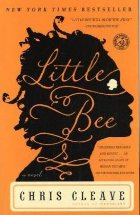
Well, Edisto Beach has had my full attention the last two weeks. Beach reading at full tilt. The choices came a little haphazardly. I'd been lagging on getting to John Hart's latest book The Last Child. I had a medical book I accidentally started in the bookstore, so I downloaded it to my Kindle and knocked that out. Then there was a Jodi Picoult novel because her stories are best read on Edisto Island under full sun with all day reserved for the inevitable reading frenzy that follows any time you begin a Picoult book. Irresistable, too, was Chris Cleave's small novel Little Bee--a back cover so tantalizing in its lure that I had it bought and in the bag before I was even sure what the damn thing was about. (Note: it delivered big-time). But the real goal for this year's reading had to do with David Foster Wallace. I was in New York last month and saw the press on David Lipsky's book Although of Course You End Up Becoming Yourself--the five day road trip he took with Wallace back in 1996 when Infinite Jest was lighting up the book world. This took all of a day and a half to digest. And then I was on to the big one: all 1069 pages of Infinite Jest, it's 300+ endnotes included. I'm about 400 pages in and still going with exuberance.

Here's the skinny:

The Last Child by John Hart:

My good friend delivers with his best novel yet. I saw him in June, and he told me he'd feel lucky if he ever wrote a book this good. I think he was right about the book being good; I also think he'll continue to grow as a writer, too. Thoroughly enjoyed this story. He's the thinking man's thriller writer.


Just Trying to Save a Few Lives Here by Pamela Grim:

I made the mistake of starting this book in the bookstore. I read about 50 pages standing in the medical aisle, and then had to have it. The book is a memoir about her experiences working for Doctors Without Borders in Africa, as well as the crazy episodes here in the states working in the emergency room--where simply ANYTHING can happen. I read these books with particular interest since I spent the better part of my high school and college career working in an Atlanta E.R.


Nineteen Minutes by Jodi Picoult:

After reading Wally Lamb's novel The Hour I First Believed, which dealt with the Columbine shootings, this novel was of particular interest. This involves the trial of a kid who shoots and kills 10 kids at his high school, and in typical Picoult fashion, she gives us unresistable characters and an unresistable plot. Damn her! I always want to find her books pedestrian, senseless brain candy, and romance-y. Sure there are moments of these things, but the woman can flat-out write. The research and fascinating facts, turns, and character reversals require control and skill--something I bow to in Picoult's bag of writer tools. I read to the last page, turned the cover, and handed it over to my wife. She read it faster than I did.

Little Bee by Chris Cleave

This might be my favorite book of the year. The story involves a lonely black girl from Nigeria and her search for the woman who saved her life once on a lonely beach. The story is absolutely riveting, the voice and writing acumen startling. I did not know Cleave's work (he's a British journalist with two novels), and I will most definitely seek out his first book. This guy's skills are razor sharp, and his storytelling ability top drawer.


Although Of Course You End Up Becoming Yourself by David Lipsky:

Welcome to the universe of David Foster Wallace. Wallace committed suicide in 2008, and the world is starting to coalesce around the idea that he was supremely special and perhaps the most talented writer of his generation. Someone said he was the first writer to grow up in the information age, and then die in it--a writer whose life work was to grasp it, comment on it, and understand it. Lipsky's book reads like a transcript of the five days he spent interviewing Wallace for a Rolling Stone profile that Lipsky's editor killed before its writing. The conversations show Wallace's elliptical, genius mind as well as all the insecurities, peccadilloes, and fascinations. I couldn't stop reading. This guy absolutely lights me up. I'm knee deep in Infinite Jest and already feel like this is a life-changer for me as a person, a thinker, a writer, etc.

Saturday, May 22, 2010

The Look Over the Edge


I saw it in a West Wing epidsode actually.

Butch and Sundance are looking over the ravine at what must be a 300-foot drop into the river. They have to jump because they people chasing them want to shoot them full of holes. Sundance tells Butch, "I can't swim." Sundance looks at him incredulous: "Are you crazy? The fall will probably kill you."

As writers, we can get so worried about what someone might think (read: agent/editor) that we totally lose sight of what it means to write without fear. And, yes, I'm talking primarily to myself here.

A book blogger I like to read undertook a year-long project to read a book a day and review it. She not only accomplished her massive undertaking, but she is writing a book about the experience. http://www.readallday.org/tolstoypurplechair.html.

She said that when one does SO much reading every single day, writers who write without fear become immediately apparent. On the other hand, when a writer does not take chances, or, worse, manipulates his reader, such tactics become obvious. She claims that her favorite books that year came from the group of fearless writers.

As one with a healthy reading life, but not nearly at the level of a book a day, I find this observation profound. Can readers feel the fear evident in a writer? I'm beginning to think so. My last novel had fear interlaced like fishing line through nearly every sentence. That book failed for that reason, I believe. Now, anyway.

Yeah, I suppose the fall could kill us, and I suppose I might not be able to swim, but like Sundance, I should jump anyway. They did.

Sunday, May 16, 2010

Great Workshop Yesterday

Superb group of folks yesterday at the Charleston County Public Library. I've been on a blogging hiatus for a while, primarily due to a small sidetrip I took down Law School Lane this past nine months.

My goal is to keep from being the absent blogger and perhaps post some interesting material this summer. Got an interesting topic or question I can research for you? Drop a line and let me know.

For example, here are my top five best books on general writing (and because I couldn't pick only five, there are now six).

Bird by Bird by Anne Lamott
The Forest for the Trees by Betsy Lerner
Making a Literary Life by Carolyn See
On Writing by Stephen King
The First Five Pages by Noah Lukeman
Hooked by Les Edgerton

These are the ones that reveal themselves again and again on rereading. These are the ones whose spell has yet to let me go...

Wednesday, August 12, 2009

All Things Pat Conroy


Well, it's official, and anyone who is a Pat Conroy fan knows that the new novel is out. South of Broad is currently number three on Amazon's bestseller list and will probably hit number one before long.

Here is a quick guide to the publicity so far:

See Pat's appearance on Good Morning America.

Read the feature article in USA Today.

See a special done by a Charleston television station on Pat (this includes an interview in his house as well as an interview with his wife Cassandra King). Be sure and look at all four parts here. (When he talks about having to hire typists and pay them hordes of money, he's talking about me. And he's a total liar.)

And here's an interview with Pat by Bill Thompson of the Post & Courier here in Charleston.

And here's an outstanding interview with Jonathan Sanchez, who owns Blue Bicycle Books in Charleston.

One more slightly hard-to-find video: click here.

Pat's talk at the Carter Center in Atlanta: here.

The Borders interview

Wednesday, August 5, 2009

Letter To Another Writer Friend

Well, I've done another letter to a friend whose manuscript I read. This one is a memoir. I don't know that my insight is all that profound, but I do try to react to a book the way a reader who is also a writer would. I know you (reader here) have not read the manuscript as I have, but the advice about writing and story and craft can apply to all of us, especially the bulleted list at the end. I often have to remind myself to heed the advice I've given others. Easier said than done, right?

Dear _____, (this is long, sorry)

All right. Finished what you gave me, and I'm going to mail the mss back to you because I made quite a few notes in the margins for you.

Overall, a strong read. Well-written everywhere--your mad skills are evident in the way you capture character and speech patterns and description of Beaufort. Basically, you kick ass when it’s time to write a book. I’m envious beyond belief.

But on to my solicited opinions (and these are ALL opinions):

The first half is unquestionably stronger than the second. Everything up through the wild sex in the newsroom is pretty much spot on. Where I think the book starts losing its forward momentum is around page 105 when Rolling Stone comes into the picture. I was chugging along with Million Year Old Man (MYOM), but then there was a quick succession of men, and I found myself trying to guess which one would become important. Once Junior is out of the picture, you don't have a strong enough conflict to catapult the reader through the middle chapters.

Along the lines of Junior, I have a few thoughts. First, I think you need to drop hints of your dancing background early on. I find it interesting that you don't ever discuss the topic while he's in the picture, so to speak, which might’ve been strategic; however, you have to confide to the reader why not. In any case, the hints have to be there so that when we learn about how big a role dance played in your life at one point, it doesn't look like you're manipulating the story for the sake of ease.

Also, you need to thread the emotional arc about how you feel about Junior and yourself, and this arc should climax with your wish on page 42 that his plane would crash. That wish felt harsh and sudden, not because I didn't agree with you, but I honestly didn't know how you felt about him. You'd protected him so long to your friends and indulged his whims and moodiness at every turn, I wasn't sure where your head was. I don't think this needs to be overt, rather more nuanced with your paragraphs of interior throughout.

Now to the middle chapters: Because you've managed a way to survive Junior, you become a different person, a stronger person, yet Byrne still regales you with life lessons and advice without acknowledging your ability to cope and survive. You don't get credit for evolving as a woman through the acceptance of your mistakes. At this point, her advice feels thin, device-like, as if you (the writer) are looking for another chance to sit on the porch with wine and pound cake and chat until sunset. If anything, she should be building up your decision to separate, but you focus more on her dance company recruitment and how she runs her business. When you do finally bring up separating from Junior and feeling terrible about it, she just tells you to stop feeling guilty. That doesn't sound like her. Too trite for Byrne. Sometimes, I wonder about her feelings about you (the way you've presented them) because she doesn't approve of the boyfriends who come through your life, but she won't say anything about Junior either. It's an obvious void in the conversation, yet your life with Junior carries the first half of the book. Why won’t she engage you directly on the subject? The indirect parables seem disingenuous to me after a while.

Another point: Duncan's declining health cannot carry the middle of the book all by itself. There needs to be another big rock some place.

The revolving door of men post-Junior gets interesting in places, but you never seem to prioritize them. Hence it's difficult to know who will become important and who will fall by the wayside. MYOM keeps popping up in unexpected places in the last third of the manuscript, and I don't know why you never come back to him to clarify that relationship (is that Gary?). I thought Rolling Stone was marginally interesting. Somehow I got the feeling he was temporary, so I never really latched onto him as a character. Byrne's interludes throughout these chapters felt redundant and irksome in places, especially when you leave us hanging about the gold digger comment with MYOM’s family on page 94 to go into Byrne's story about Jefferson Davis Ehrlick. Later, I felt like she was trying to one-up you with her story about Nick—this after your newsroom sex with the hunkish kayak guy (Neptune, was it?).

With Duncan, I feel like Byrne never mourns his passing (at least in real time with you). Does she harbor ANY resentment for losing him too soon or having to share him with other women? Is there any conflict between them at all that you can explore? I feel some tension in her voice when she talks about him--could it be simple sadness that you didn't get to experience him the way she has? Is there something to play up more fully with Alison? Janie’s death? The distance or lack of distance with her adopted daughters? In my opinion, you don’t have a book if Byrne has no conflict inside of her. Something in her needs to mirror the pain in you. That’s why you were so perfect for each other, I suspect. I also suspect that you loved her so much in real life that you’re somehow afraid now to let her feel any real pain on the page. Even in death, you’re still protecting her. I don’t want to get too “Bernie” on you, but I think this is the primary reason the middle chapters lag, and the last third doesn’t quite yet pop.

Most of the middle chapters have mini-crises (e.g. The "whorehouse" comment, Rolling Stone, Byrne's lagging vision), but they miss the punch of anything large. There's potential with Byrne and Alison, but nothing much comes of that. As a consequence, the rotating discussions with Byrne feel more like transcripts and lessons with no practical application. Possible solutions here: playing up the Councilman Queener stuff even more, exploring with depth the effects of Duncan's death on Byrne (she says on page 134 that he died three months before their sixtieth anniversary; I think that would be devastating for her), showing some real threat with the swollen leg (mostly you characterize it as a nuisance, and since it drags on for more than a year, you lose the tension it could bring), and/or bringing in your parents earlier in order to maximize them later on (your father is too underdeveloped if you're going to do the Nicaragua thing; your mother barely gets a mention).

Okay, last third: I think you need to bring the sisters into the story in more developed ways. It seems you could hint of Lisa's conflict with Byrne early on and use that tension to carry the conflict between them. They love each other, but they fight like hell perhaps? I get the feeling Lisa blames Byrne for not embracing Alison the way she does her business. This needs exploring. The way you have it now, the sisters seem like add-ons--which plays odd when you talk about how much these women love Byrne. Where have they been the entire time you've known Byrne? Where were they when Duncan died? They don't even make an appearance in her life, it seems, until it's time to go to Charleston, and that episode rings very thin because there's no relevant reason to go and nothing of note happens while they're there. I think it's an amazing scene when Lisa resigns because Byrne still expects her to be executor of her will when she dies. Sounds just like a mother/daughter relationship, but you've got to make it feel that way to the reader. Lisa needs to be around more. She and Byrne need to interact more.

I also feel you don't play up Byrne's declining health in a way that maximizes the story's tension. I have made careful notes for you on this topic, particularly with reference to her eye (pps 148-9).

As to your parents--if you're going to keep the Nicaragua chapter, you need to find the tie-in back to you and Byrne and Beaufort. Does your relationship with your father in any way inform your relationship with MYOM? If you need to bring your romantic life back into the play in the last third of the book (and I think you do), this could be a nice vehicle, in addition to allowing your parents to play a small role. If you’re going to keep them, they need to show up on the page periodically throughout the entire book, not just in one chapter in the middle and the big one at the end.

General Writing Advice & Observations (if it sounds preachy, I apologize sincerely. I do half this shit myself):

  • Look for tension on EVERY page. I know this sounds excessive, but there must always be a reason for a scene, and conflict drives the train.

  • If nothing is wrong with at least one person inside of a scene, cut it. Write only the scenes where there is a complication with someone on some level that somehow affects you. Stretch the big conflicts; pepper the story with the small ones.

  • Keep opening your thoughts on the page. There are places where you don't mean to be closed off, but you are.

  • Make Byrne more interested in you and less interested in herself.

  • Every time you launch into a Byrne story, make sure it has application to you and what you're going through. Just because she has a story that is similar to what you're enduring doesn't mean she ought to tell it. Avoid too many parables.

  • Don't slap me, but I think you ought to consider converting this book to past tense. The present tense is really problematic with flashbacks and dialogue that summarizes past events, etc. I think this would augment the power of the story, lessen confusion, and minimize awkward verb structures.

  • Watch all dialogue tags. Use "said," "replied," and "asked" whenever possible. You overuse "sputtered" and "tell." Not a hard and fast rule, but I've marked several places where it reads a little too "Hardy Boys."

  • Cut the number of semicolons in the manuscript by 2/3.

  • Look for every place I've drawn a box around a comma. This is a comma splice and needs to be fixed. (See page 36 for quick explanation). Editors will stop reading if these are too pervasive. In nearly all cases, a period does the job nicely.

  • Note the commas I've inserted. You seem to be missing most often commas with compound sentences, intro subordinate clauses, nouns of direct address inside dialogue, and commas in a series.

  • Take a look at transitions. In a few places, they are quite abrupt, which serves the story in terms of conciseness, but in several examples I’ve marked, you need to set up a scene with a more description before launching full bore into the dialogue.

  • Because it's first person narration, contract verbs where you can.

  • Might need to consider another title. There’s a published book already with this title. It’s about the history of the typewriter. I don’t know if it’s a deal breaker, but I don’t know that I love it either. Other possible considerations: Jete or Daughter-by-Byrne. I’m still thinking on this point.

It’s going to be a strong book. It already is. Second half just needs focus and momentum. I have full faith in your abilities, and I enjoyed reading what I did. I’ll be curious how it ends and how you will modify some of this stuff. A few of these changes might be labor intensive and tricky in spots, but I’m convinced they will serve you well when it comes time to submit.

Thus ends the lecture.

Lotsa Love,
ss

Friday, July 31, 2009

Letter to a Writer Friend


I may or may not be a good writer friend. This summer I have read two manuscripts from writer friends, and am now ensconced in a third. I have a tendency to write lengthy line notes as I read, along with a letter in the end. I do this because I learn SO much more about writing a novel when I comment as an informed reader for someone else. It's also entirely possible I will no longer be asked for my opinion if I keep at this.

Here 'tis:

Dear _____,

I'm through five chapters. And here are my impressions. They are lengthy, and I can’t help it. I’m a novelist. Share these thoughts with your other readers and see if they agree. In the end, these are suggestions only, and you can tell me to go take flying leap. It would be okay if you did.

You have the poetic eye, and your mad skills are evident on every page. You strike me as a patient writer, information loaded into every sentence, every image. Obviously, your strengths come in setting up a scene, describing the land, a character, an ethos. The poetry in your prose is sharp, carefully imagined and well-executed on the page. I don't think an editor who reads your work would have problems with the quality of the writing.

The problems in this mss come in the structure and pace and execution of the story. I have a feeling this will not surprise you.

I would suggest this exercise. Go through the first thirty pages and highlight (literally) every sentence that depicts direct action in real time (not description, not flashback, not interior monologue): e.g. "Late that evening, Grandpa swung by the cemetery and picked me up in his truck." What you're going to find is that the first chapter and the first few pages contain the most direct action, but then it falls off dramatically. Chapter two begins with Grandpa going inside the house. Chapter three begins with Mason going inside behind him. No direct action occurs for three and a half pages between these two actions. In chapter three, you have Grandpa shouting a few lines from the dining room, but the first major character interaction in the entire novel doesn't come until the knock on page 16. And even then there is one exchange of greeting at the top of page 17, the next coming at the bottom of page 18, one line at the top of page 19, the next at the bottom of page 19, etc. You see what I mean by this. You aren't building tension. You're spoonfeeding your reader with backstory and the narrator's pretty language of description, then peppering the whole thing with bits of dialogue that sound more akin to Bartlett’s than to a real speaking person. You'll never be able to maintain tension when you have one exchange of dialogue followed by a thousand words of backstory. Furthermore, as you well know, readers want to learn about their characters by watching them in action, not by having a narrator tell them what that character is like.

GRANDPA

I want to hear Grandpa talk on page 8 about the Crouchens, really talk about them honestly. Not resorting to witticisms like "Greener pastures are all anyone wants." Too many characters, when they do speak, talk in inscrutable proverbs. Sure, this device might mirror the Biblical themes of your story, but too much of it prevents your readers from getting to know the characters. It sounds too much like Forrest Gump with all his "Momma always said" moments. I want to see Grandpa put his arm around Mason and say, "I know you miss your mom. I miss her, too. That’s why I’m building this boat." See what I mean? You're making Grandpa too unknowable by having him hide behind supposed wisdom and conviction.

I also have a problem with his paradoxical actions. A man who is going to fight the taking and flooding of his land would not build a boat. He'd build a fence and guard it with a loaded shotgun. You have to ask yourself what kind of a man would build a boat in response to the situation you've created. I also question Grandpa's motivations. If he sold off most of his land and abandoned his olive trees, then why would he care if the government has come to take his land? He's already shown us he will accept money in exchange for land if the price is right. Why is the government's offer so hard for him to accept? The scene with the two government workers appears to be an intellectual exercise for him--whether he can outwit the two guys across the room, almost as if he doesn't care what is at stake so long as he wins the verbal joust. This totally compromises his sympathy with the reader. I still wonder about the offer. Was it any good? If he’s owned the land for a long time, I would imagine the government’s offer would be exponentially higher than what he paid for it. His only response to the offer was, “Do you know what this land cost me?” I don’t know what that means. Did it cost him more than it should to acquire the land? Again, too pithy, too mysterious.

I think your instincts are right: this taking of his land ought to be devastating to him, and on multiple levels, but he shouldn't be cavalier or cute about it. He can be curmudgeonly and still be sympathetic. But you have to present him as a real person. I'm far less interested in the look and zeitgeists of the town than I am in a young man and his grandfather trying to deal with the loss of a daughter and a mother. There ought to be tender words exchanged at the cemetery. The bout with the land ought to be a corollary that parallels the loss of Mama. At the same time, there needs to be some kind of conflict between Grandpa and Mason. Maybe over staying or going? Selling or fighting? Both of their convictions that God is talking to them? Something that gives this story some forward motion.

An example:
"Where the hell have you been?" Grandpa asked, his truck grumbling to a stop just outside the cemetery gate.
I shrugged. I was too afraid I'd burst into tears if I answered him.
He got out of the truck. I sat alone on a bench overlooking the red mound that hours ago had been a gaping hole in the earth—that terrible moment I watched her casket disappear into the abyss.
“We come from the land. We go to the land,” he said. “It’s always about land.”
I nodded. He was always talking in those highfalutin’ phrases. I half-expected him to launch in the book of Luke like Mama always did, but I swear I just wouldn’t be able to handle it if he did. I leaned forward so he wouldn’t see the tears that had sprung from my eyes. He put his arm around me and sat on the bench. “It’s all right, Mason. I miss her. Damn, I miss her.” For once we wouldn’t fight over this and everything else. We both looked into the darkness and exchanged no more words.

Or something like this....The point is that you have to suggest more than you actually say.

With the land, you have to be calculated when you have Grandpa wanting to fight. Don’t let his motivations and actions contradict one another in theory, even if they do in practice:

E.G.: Grandpa believed a man should trust in God, but tie his camel tight. That’s why he wrote letters to the editor every week about the gross injustices that were befalling our town, but at the same time, he took the divine instruction seriously that he should convert his home to an ark, a modern-day Noah he was fond of saying. People might think he was crazy, but when the waters came, he would be ready. And no one would say he’d given in. If anything he’d shown Jesus’ maxim to be true: a prophet is never appreciated in his own land.


Save the poetry for the moments that need it. But don’t let it interfere with story. In the end, readers want to read a good story. And this means pacing your story so that we feel the push and pull of the action. As is, your story lags big-time. Your description is so out of proportion with direct action that you could completely flip the ratio and it would be about right. By page 15, I’d completely lost the ability to appreciate the beauty of the language because I was completely oversaturated with it. Just glance at the pages and you’ll see what I mean. No page has the quick line of dialogue. They’re all completely full--margin to margin--with narration and description.

Now, I’m well aware of other writers who load their stories more with dense prose than dialogue or action, but even those guys like Irving, Pynchon, Foster-Wallace, Franzen, most of the post-modernists, are moving a story forward with action. What you have here in Begotten feels more Proustian, more Denis Johnson (when he’s ruminative) and while this kind of a story can work on several levels, I can tell you that no editor is going to give us first-time novelists this kind of latitude, no matter how stunning the prose. They’ll keep coming back to the big question: where’s the story in this? And why should I care?

I HIGHLY recommend you look at Les Edgerton’s book called HOOKED or Noah Lukeman’s THE FIRST FIVE PAGES. These books show you how important the first chapter is and why openings that worked as recently as five years ago have changed significantly. Both books predicate their theses on stories that open with direct action, action that illuminates character and conflict. Backstory is nearly always saved for later in the story and only in doses that are appropriate (insofar as they impact the direct action). You can get away with some digressions and the poetry of description, but it has to be peppered, not poured.

Mason

To me, he feels sensitive and observant, but I don’t have any sense for his personality. He has no more than a line or two of dialogue in the first five chapters. No one calls him by name. I have no idea how old he is. He seems to know things he can’t possibly know (the whole deal with the government agent and his wife, for example), and the only thing he does in the first thirty pages is leave a cemetery and walk inside a room. This tells me nothing about how he is dealing with his mother’s death (other than what he poetically describes), how he feels about his grandpa (he only buys into the ark idea because his mother helped with it a little bit before she died), or whether he has any friends, any loyalty towards the town, any opinions himself about the moving of the town. I know he’s an excellent correspondent (a superstar as far as narrators go), but what I’ve read so far makes me wonder if he describes everything and everyone so beautifully because he’s too grief-stricken to present himself honestly, or his grandfather. It’s all smoke and mirrors with him. I want honesty, raw grief, stupid actions. I want him to get drunk, throw a glass against the wall, tell his grandfather that his idea about the ark is the biggest fucking mistake he’s ever heard. If you want to describe something, describe his room, his bedside table, the books he reads, how his heart feels when his mom dies, how he reaches out to a pretty girl at school who listens to him and understands, etc. I don’t care nearly as much how much he loves the first frost of fall or how the town prefers diminutive names or him telling me he misses his mother. I’d rather him take a walk the morning of the first freeze to meet a girl. I’d rather he confide in her how he can’t cry in front of his grandfather, lest he come off as weak and girly. I’d love it if he were full of contradictions—prayers with the f-word in them. You know what I mean?

Religion

In short, you beat your reader over the head with the allusions, metaphors, sermons, clerics, and the Owen Meany-like divinity idea. It’s too much of a good thing, really. My suggestion is to keep Mason divine and develop it, keep the ark idea, cut the allusions and metaphors by 75%, and cut the church scenes. The reverend and Grandpa sound exactly the same on the page. Eliminate the reverend or collapse both characters into one. Give your readers some credit for being able to see the connections without your explicitly making those connections for them. Take chapter 7 for an example. I love the gibbous moon, but to compare it to the Blessed Sacrament and to extend it with the verb “genuflect” (second time you’ve used this word, which makes it a no-no because it’s way too specific to use it twice in reference to the stars and sky) takes the theme too far. Make us work a little bit. Maybe say the moon is like a wafer, but don’t give us the religious metaphor every chance you get . It feels like you’re working too hard at symbolism and theme. When you do want a biblical allusion, give it to us straight, as I’ve done in a couple examples above.

Approach and Structure

I think you could greatly benefit from an outline. As an exercise, reread each chapter as you have it and describe what happens. If your outline starts reading like Grandpa walks inside, Mason desribes the heat, Mason describes the families of Jericho, Mason describe Mama’s thoughts about dreams, Mason describes Mama’s insistence on the importance of education, Mason describes how his mother afforded his college education, Mason describes people’s names in the town, Mason describes the Jordan River, Mason describes the Michael’s family and how the whole town felt like a refugee camp—if your outline is littered with “Mason describes” statements, you’re going to realize, “Oh, I better have something more urgent happening,” or “I better show the nexus of thought between this action and this description.” For you, an outline could really solve the pacing problem. Donald Maas says you MUST have tension on EVERY page. Apply this test to your manuscript. It doesn’t require fireworks or backflips, but there needs to be forward motion, personal stakes complicated by problems, and public stakes complicated by problems. And it’s really nice when all three of these elements merge into an unstoppable locomotive of character and conflict that the reader simply can’t resist. Projecting only interior monologue—even if it’s conflicted—won’t compel because it’s one-sided. Think that for every internal conflict there needs to be a correlating outer one. Mason misses his mom, AND he’s trying to talk sense into Grandpa. Raul is Mason’s best friend, BUT he was noticeably absent during Mason’s mother’s funeral. So, yes, inner and outer tension on every page. Each page at a time. A constant upping of the stakes. This formula works for everyone from Cormac McCarthy to John Grisham. Literary, commercial, it’s no matter.

Here’s a possible progression: Mason mourns his mother at her grave, and Raul was a no-show. Grandpa shows up drunk. Mason has to drive him home. Mason describes the ark transformation. The agents show up the next morning as the Crouchens are packing. Grandpa invites them in, but the tension escalates and he tries to kick them out. Mason politely shows them to the car, and they try to persuade him of the right course of action. Mason knows it makes better sense to take the money (it’s far more than his Grandpa could ever get selling outright), but he is torn by his loyalty to his grandfather and the cause. He tells them not come back, or they might be facing the working end of a shotgun. But silently, this encounter tests his mettle, gets him thinking about what he should do. And the chapter ends with Mason revealing that he is a son of God, right as Raul knocks on the door.

See what I mean? You can then crank in description in the appropriate places. You’ll undoubtedly lose some gems (“kill your darlings”), but you’ll be able to balance story with language in just the right ratios.

I think you have a lot of work left to do. Again, it ain’t about the writing. It’s about your plot, your pacing, your characterization, and your development of conflict. You’ll have to restructure these first ten chapters, analyze each moving part. Think terms of scenes. After each scene, ask yourself, Why is this here? Is it necessary? Can I cut it? If not, why not? Etc. Ask the hard questions. I’ve made lengthy line notes for you in the first half of the pages you gave me, and hopefully they will help.

I would love to see a rewrite. The potential is amazing. I really have enjoyed what I’ve read so far. You got the chops, bro. You just gotta put it all together.

Lotsa Love,

ss

Monday, July 20, 2009

Mac, Part II, the Booq People

Okay, I've shared my lame brain theory about Mac computers, and now I will follow up with a quick nod to a like-minded company who makes computer bags and accessories for Mac lovers.

These folks at Booq exercise the same innovation, care, and quality workmanship in their bags as Apple does in making computers. They are designed specifically for Macbook laptops, and I can't believe how they've thought of everything when it comes to getting on a plane or pulling your computer from the floor at a business meeting or simply storing all your computer gizmos rather than stuffing them in a desk somewhere.

I have a BOA bag fit for my 13" laptop. The pouches are not velcro, but magnetic. They are designed to hold the boxy power supply and still close snugly. The main storage area of the bag will hold thick books (which is a must in my case) without making it hard to close. The front compartment holds all the small stuff like pens, keys, iPod cords, etc. And the side pocket fits an iPod, even with a small slit to pass the earbuds through. There's a tracking system technology sewn right into the bag should it ever be lost or stolen. When you pick it up by the handle, you can feel the balance and the quality of the fabric in your hands. The computer compartment also accommodates Booq's Viper laptop sleeve that you can use when you don't need the whole bag but you want something protecting the computer.

I might be a geek about this stuff. But these bags are designed and sewn with style, quality, and an overall hipness. I get questions about them every time I travel. You can check out their website here.

Wednesday, July 15, 2009

Mac People

I started using Mac computers when I was in high school. We had a Mac lab at Furman University when I was there (but no longer [on the Mac lab, that is]), and since then, I have owned Apple laptops mostly because for me it was the only computer a real writer should use. Every novel, short story, letter, and poem I've written I did from a Mac, and still today--though I do use a PC for my "real" job--it's the only computer I'd ever buy. Place once mattered when famous compositions were talked about. Hemingway wrote A Farewell to Arms in Key West. Faulkner wrote most of his novels from Rowan Oak. For me, I've written everywhere from Key West to Mississippi, but it's all be on my Mac. A romantic idea, even if composing on a computer ain't so much.

For the writer, a Mac contains an aesthetic, an artistry in the lines, that make it irresistible for the fictive mind. Sometimes, I like to think they made Macs from the beginning in 1984, back when they looked like an upright bread box, with the writer in mind, as if to say, "here, try composing on this beautiful machine. Maybe the words will come easier." I write this blog post today from my Macbook, and, yes, the words are coming easily.

On a recent trip to New York City, I went in Apple's biggest retail store to meet other like-minded folks. People milled about the myriad iPods, iPhones, and laptops, and for a moment, I imagined us all novelists seeking our "pen" of choice, our muse for mastery, the machine that makes the words flow. Later, I saw a person in the Winter Gardens atrium next to Ground Zero typing away on her Macbook Air, and I felt quite sure that if I plopped down beside her, we would've had a good conversation about the computer on her lap, if nothing else.

So, maybe I'm a little romantic about the computer. I can't help it. I've never owned any piece of electronic equipment that double as art (can you say magnetized power supply? Glass touchpad?). Nobody markets or delivers their product like Apple. But don't take my word for it. Unpack a new computer from its box, and you'll see that every component is wrapped just like a present.

Saturday, July 4, 2009

What's on Your Nightstand? With a Comparison to What's in Your Underwear Drawer

That was the question, and I found it interesting, so here's my answer:

Vincent Bugliosi's Reclaiming History, which is a 1,600 plus door-stopper of a nonfiction book that tries to single-handedly settle the questions about the Kennedy assassination.

Brian Greene's The Elegant Universe. This book attempts to put string theory in digestible and coherent chunks. I am fascinated by Greene's writing, and every now and then I can take in a few more pages about how the universe was formed. This stuff blows a few circuits every time I pick it up.

Bernie Schein's If Holden Caulfield Were in My Classroom. Bernie is one of the most brilliant and eccentric people I know, and he was equally so in the classroom. This memoir of this thirty-plus years teaching English and writing in Atlanta is a compelling read for me as I return to teaching once again. He has also become my writing teacher.

Everything Scrabble by Joe Edley. I'm a closet Scrabble addict. I've managed to amass a competitive ranking (in theory) by battling my computer, and this book actually serves as a reference study guide. I'm a total geek, I know. Scrabble is a poisonous diversion for me when I should be writing.

Look Homeward, Angel by Thomas Wolfe. A gap in my classic reading that I hope to close by summer's end.

The Way It Is by William Stafford. He is my poet. My hero of verse. I read him constantly. I still remember the afternoon he died. We'd come to class to discuss one of his book when our professor, who was a good friend of Stafford's, came into the room, turned off the lights, and told us what'd happened. He then told Stafford stories for an hour as we listened enraptured, in shock. I'll remember it till I die.

I'm looking over this list, and I find myself a little embarrassed. What a wierdo. I liken this to sneaking a peek at someone's underwear drawer and feeling uneasy, not because there is underwear in there, but because your spare change, your spare glasses, your travel toothpaste (by mistake), some old love letters, a book light, a pistol, and an expired passport are also mixed in. You know, the unexpected stuff that says something about you, but you're not sure what.

I say it's still a good question, though. And for the record, only underwear is in my underwear drawer.

Monday, June 29, 2009

Joanna Hershon & Jewish Cowboys, This You've Got to Hear

I want to give a quick shout out to my friend Joanna Hershon, who just sent me her most recent novel, The German Bride.

If you've ever wondered about the Jewish immigrant experience, then this novel promises to tell the stories you haven't heard, as it traces Eva Frank, a German Jew, and her passage to America through Santa Fe, New Mexico (this ain't no Ellis Island to Brooklyn yarn apparently). Pat Conroy calls it "a surprising novel of grace and refinement." Nicholas Delbanco says Hershon is a "first-rate talent" and the novel "a riveting read." (And of course I agree wholeheartedly about the talent part.) Vanity Fair did a nice review and asked Joanna who her dream cast would be. No matter the story, I like her choices. Natalie Portman as Eva? Sounds good to me.

Joanna as a writer crafts her stories with thoughtfulness, depth, and humanity. Characters linger. She controls every page. Her writing chops sizzle.

I would be remiss if I didn't also recommend her first two books as sure things, Swimming and The Outside of August. Bottom line: Joanna's the real deal, even if I'm a little biased. Thought you'd like to know.

Here's a link to her website.

Sunday, June 28, 2009

The Long Vacation (What One Read)

Some vacations are structured around activity--The zoo, Coca-Cola Museum, lunch in Centennial Park, Braves Game (this was me last summer)--but others get noted for their decided lack of activity. Which brings me to this summer's escape for the Scapellato family: Edisto Beach.

Kids and wife have the beach. I have unrestricted reading and writing. I'm sure I'm a grave disappointment (easy on the "grave" part) to my dermatologist, but every morning upon waking, I got to spend my morning reading in a chair oceanside. When the sun spread her light in the full splendor of afternoon, I wrote in the cool of the camper. After 14 days, I have one hell of a tan, I made it through eight books, and I'm off to a good start on the next novel project.

So here's my fully eclectic catalogue of 09 beach reads:

Manhunt by James Swanson: page-turning account of the 12-day hunt for John Wilkes Booth after he shot Lincoln. Riveting. Mary Surratt was the first woman hanged in the U.S. I didn't know that.

A Long Way Down by Nick Hornby: spot-on British speech, genius observational humor, Hornby is a master at character. When I was sixteen, I would've been in love with Jess.

Salem Falls by Jodi Picoult: impossible to put down. Riveting plot even if I didn't exactly buy it (teachers are notoriously critical of novels about teachers). Ending was jaw-dropping, too, even if I didn't buy that either. But did I enjoy the book? Absolutely. Picoult is very good at spinning a yarn.

Bel Canto by Ann Patchett: A writer's writer. Jaw-dropping writing on every page. A plot so bizarre and beautiful, one wonders how on earth she came up with this.

Tin Roof Blow Down by James Lee Burke: wow, the guy can write about the Louisiana. He is to the Bayou what Pat Conroy is to the Lowcountry. Except Burke writes of the hardscrabble life of Dave Robicheaux, his steely PI. Dialogue is some of the best I've read. Someone called his writing Faulknerian, and somehow, oddly enough, I agree. Beneath the guns and car chases, there is something visceral and soul-moving about the people of this place.

Buffalo Lockjaw by Greg Aames: First novel, a must read. I'm Aames' newest fan. A piece of art with angled prose that I kept reading aloud to Sara, much to her irritation (she was always reading her own book, and my high praises were an interruption). This is a novel I wish I'd written. A moving story about one Thanksgiving in Buffalo with a man caring for his dying mother that was equal parts dark and hilarious. Weird, I know. Superb title.

Sweetwater Creek by Anne Rivers Siddons: I'm not supposed to read this type of stuff, but I am a friend of Annie's, and I love every word she has ever uttered. I'd read her grocery list with rapture. I don't which she writes better, the Lowcountry or Atlanta. If I had to say, this novel is one of the better ones.

Number the Stars by Lois Lowry: a classic. My daughter was reading it, so I borrowed it. Finished it in one sitting. A beautiful story I knew nothing about: Danish Jews trying to escape to Sweden. Well-deserving of its classic status. Exquisite writing with heart-stopping impact. I did not know that Danish scientists came up with cocaine and pig's blood to throw off the German dogs from finding hidden jews. Such desperation. And it worked.

And so here are the vital stats on my most recent life escape:

14 days
8 books
2861 pages read
35 pages written

My idea of a vacation.

Wednesday, June 10, 2009

Laptop is the New Mole Skin Journal


Had to get up at 11:00PM last night to change the point of view of my opening chapter. Went from first person to third person. I was reading a book on Abraham Lincoln of all things, when suddenly this revelation hit. I leaped from the bed and rushed to the computer. I can't say why such an epiphany came at such an odd moment. Thank goodness the computer was on. I know, I know. I'm a lame-O nerd. I can't help it.

I'll probably switch it all back in a week.

Sunday, June 7, 2009

Okay, LOLA, my friend, here goes...

Recent struggle: begin with lyricism (My father believes there is a little of God in any city beside the water--river, lakes, oceans, it's no matter.), or begin with situation (Three days after my twenty-eighth birthday, my wife kicked me out of the house for NEARLY having an affair.).

Can't decide honestly.

Even more vexing is the notion that it might not matter, and perhaps most vexing of all is that I know it doesn't matter, but I can't seem to stop caring about it.

Neurotic?

Welcome to the life of a writer.

Maybe these concerns do matter on the level that a writer must engage his material to the nth degree, even if the story itself presents only the top layers of thought and idea. Put another way, a documentarian might shoot 100 hours of film to capture the three minutes he needs to tell the story at hand.

It's not enough to know your story. It's far more important to learn how to listen to your characters and tell the story the way it should be told. My problem stems from a desire to control my characters. I create them and then I start bossing them around. They become recalcitrant teenagers, shutting down like parent vs kid on opposing couches when really if I would let them speak, let them breathe, their story might come to me. I might simply have to transcribe at that point. This is so much more difficult than it sounds.

Some writers write chronologically. Begin chapter one, GO. Other writers I know skip around, working on chapters they feel like working on that day. Don't want to write the scene where Beth tells her daughter to get the hell out of the house? Well, then maybe write the chapter where Kathryn puts a butcher knife to her husband's throat or the scene where Sam comes back to Charleston to face his father.

John Irving has a new novel coming out this fall, which pleases me to no end. This is a man whose sensibilities ride more along a nineteenth century track, and while this would seem a hopelessly impossible idea to pull off in today's age of immediate gratification (yes, maybe we should start with the "almost-affair" and save the philosophical waxing for later), he remains a Dickens for our times, a master purveyor of the winding story that delivers big in the end. In this interview for the New York Times, he discusses the importance of final lines and how he constructs a novel backwards. God, I love this man.

Tuesday, May 19, 2009

The Absent Blogger, Part 2


All my followers are gone. My friends have folded their tents, headed for pastures where the writers actually have something to say (are those green?).

This is my second blog entry of 2009, and I should be flogged at the post of dilettante writers. I am an impostor, a liar, a cheat. To be a writer, one must write, and I have spent the better part of 2009 not writing--well, I should say not drafting. I've been working on a novel project, taking millions of notes, filling journals, reading books. I have not blogged this year, and I have no answer for that. I struggle with this idea that blogs tend to focus too much on the blogger, and I don't feel like a spotlight should be turned on me. Ideas and opinions, yes, I have many. It's tough to share them. Maybe I'm shy. Maybe misanthropic.

Okay, anyway, what brought me out of the woodwork are the numerous pieces of inspiration I've come across lately: interviews, essays, books. I'd like to keep some of them in one place, so here we go...

A MARVELOUS interview with Pat Conroy, the master, my inspiration, my friend.

What is now considered the greatest commencement address ever, delivered by David Foster Wallace in 2006 at Kenyon College, and has now been expunged from the Internet because Little Brown has published the address in slightly bowdlerized form to cash in on the graduation season.

Another marvelous interview, also from the wonderful folks at Oklahoma State whose Poets & Writers program is nothing but top-notch--this one with the amazing Anne Lamott.

So, yeah, I guess I need to resolve to be a better blogger. Maybe a little more extroverted. Maybe I should venture out into cyberspace a little more often.

Hope you, single reader, are well.

Sunday, January 4, 2009

The Absent Blogger

Oh, no, I'm the friend who never writes. I'm the writer who's been staring out the window for a month. I'm the blogger who did two entries in December when he should've done something like what, thirty?

Okay, the horror, yes, I'll try to do better. I'll put it on the list of resolutions (sure to fail). Is it just me, or do you tend to make resolutions until about the age of 30, and then realize you ain't following through on any of the stuff you said in January, so then from age 30 on, you just grin and say, "I'm not making resolutions this year. I'm just going to commit to betterness: being better than last year." Yep, that's me.

I want to get back in the gym. I want to write my magnum opus in three months. I want to become a philanthropist. I'd like to be universally adored. I'd like to do one scintillating, profound blog entry per day. I'd like to live my life with a tear-jerking string arrangement in the background as I push a Redfordian lock of hair from my eyes, my girl by my side, the sun all fire-like on the horizon.

But none of that's likely, is it? I'm bald. My days are full. Fiction is the new poetry (as far as remuneration and readership is concerned), and I'm adored by the dog (the only CONSISTENT adorer of mine).

Somehow, though, that's okay. We're starting a new year. I'm beginning my reading list anew. I'm up to two books already since I was nearly done with both of them last year. I back teaching young people again (just in early mornings), and this makes me happy. I have a Blackberry. The words are flowing. Outlook cheery.

Let's chat soon. Handwritten is best.

Monday, December 15, 2008

Word of the Year

Remember when the word of last year "TRUTHINESS" was all the rage? We can go way back and remember when BLOG was the most looked-up word on the Internet. Then there was WMD and PODCAST and some clever turns like PECKSNIFFIAN, named for an unscrupulous character in a Dickens novel.

So, it's looking like 2008 is going to give us a wicked reminder of our nationalizing government tendencies with the top two finishers (according to Merriam Webster) invoking the economic meltdown of the century so far: #2 SUBPRIME......#1......wait for it......BAILOUT.

I long for the days of Monica Lewinsky headlines and the meaning of IS. The Mortgage Boom, the headlines about French wines appreciating at astronomical rates. Where is Mister Rogers, the Teletubbies brouhaha, the days when Andy Rooney was the most controversial piece on Sixty Minutes?

No need to answer. It's rhetorical. But it is fun to remember.

Monday, December 8, 2008

I'm So Glad Maureen Dowd Was Off

Or else we wouldn't have gotten this BEAUTIFUL piece by Timothy Egan. If you get sick of the celebrity memoirs and fiction that more resembles what my dog deposits, you'll want to give this a read.

Typing Without a Clue

Oops, it turns out that lovely newspaper whence this article comes requires a registered account to read. In case you don't have one, here's the skinny.

Joe the Plumber is writing a book. I will reserve comments about the things he apparently cannot do: pay taxes, hold a legit plumbing certification, etc. There's a good chance we'll discover he can't write either, but it won't stop the juggernaut of money thrown his way for telling us his story (as if John McCain didn't tell us enough about Joe's life).

Timothy Egan tells us Sarah Palin is next in line for a high-profile memoir. Allegedly, a seven figure advance is in the works for her story (I can see it now: Chapter 1 Staring Across the Bering Strait). Mr. Egan in his article points out that a book from her is potentially a verbal train wreck. Case in point (Palin in an interview with Matt Lauer on when she knew they'd lost the election):

“I had great faith that, you know, perhaps when that voter entered that voting booth and closed that curtain that what would kick in for them was, perhaps, a bold step that would have to be taken in casting a vote for us, but having to put a lot of faith in that commitment we tried to articulate that we were the true change agent that would progress this nation.”

His point resonates clearly. Writing is not like teaching. Just because you think you can do it, does not mean you can. And for those of us who ARE doing it, tempers tend to flare when dilettantes swoop in and steal the spotlight--which is in itself inaccurate since writers work in solitude and most of the ones I know prefer to stay there. I think really writers resent people who take the spotlight and don't represent the purists of the craft faithfully.

Egan again:
Day in, day out, [writers] labor to find their voice, to learn their trade, to understand nuance and pace. And then, facing a sea of rejections, they hear about something like Barbara Bush’s dog getting a book deal.

Our columnist, one faithful Mr. Egan, leaves these charlatans with one final piece of advice:

For the others — you friends of celebrities penning cookbooks, you train wrecks just out of rehab, you politicians with an agent but no talent — stop soaking up precious advance money.


Amen, brother! (But what am I getting all self-righteous for? Not like Joe the Plumber stole my book deal or anything. But it is fun to think so.)

Tuesday, November 25, 2008

The New Pat Conroy Novel

Pages from Conroy's manuscript

It has been almost 14 years since Pat Conroy published Beach Music. 22 years since The Prince of Tides. In the intervening years, he's done a memoir on basketball from his years playing at the Citadel. He wrote his passion project, a cookbook with essays and stories. Yet in the back of his mind, he's always had the idea for the big Charleston novel, a story that's been brewing since he moved from San Francisco back to the east coast in the mid-nineties. He's had things to say about the Holy City since he last left it (fictionally) in The Lords of Discipline in 1980.

South of Broad should be out next September. For those who expect the inevitable delays with a Conroy novel (Beach Music was delayed for years), I would say rest easy. The novel is finished; it's edited (original manuscript weighed in around 1400 pages), and no one is happier about that than Mr. Conroy himself (perhaps Sandra, his wife, is happier).

The novel will be big, epic, like the others (final book weighs in somewhere around 600 pages). Stylistically, Pat remains acute in his sensitivity, sprawling in his images, and is still the overwriting show-off that I love him for--except even better. He continues to grow as a writer, a claim he's shy about, but one I think is true.

Leo, his protagonist, is a newspaper reporter in Charleston, and a large chunk of the plot revolves around a serial killer and a high-profile murder in the 1980s (all invented [no ripping from headlines here]). But Conroy has not morphed into the thriller writer by any stretch. His main character remains the Lowcountry of South Carolina, his story centers more around relationships and his eminently likeable Joycean protagonist. At the height of the novel's intensity is a mind-blowing chapter involving the serial killer and Hurricane Hugo (the still legendary storm that leveled Charleston and several towns to the north in 1989). If you are a Conroy connoisseur, you can look forward to a novel that recalls The Prince of Tides and Beach Music in terms of scope and style.

Note: As a favor, and because I love Pat dearly, I typed the last third or so of the book, but because I am still first a fan (I will do a big blog entry soon on my friendship with Pat), I asked him not to send the final two chapters. I have not read the entire novel and don't want to until it comes out. I want the all-absorbing experience of curling up on the couch on a rainy day, cracking the cover on a big new Conroy book, and swimming in his worlds--just like you do.

Monday, November 24, 2008

Lists


Life seems to be injecting lists into my daily experience. The NY Times has the best books of 2008 (already). Another blog I read has 75 books every man should read. There were the 10 Commandments on Sunday. Another blog I came across has 101 things you don't know about [him the blogger]. And just last week someone asked me about my favorite books.

Lists are hard. But I like them. They interest as much for what they include as for what they don't. They elicit opinions--sometimes strong ones. They force self-reflection, solicit new lists, promote discussion. I'm not David Letterman, but I think I'll try some of these.

Here's a top ten contemporary novel list with a tie for ten:

1. The Prince of Tides (turned me on my head at age 20...had no idea language could do this to a person)
2. Sophie's Choice (a dilemma that leveled me...I was never the same)
3. Lonesome Dove (I didn't know I could love two characters, fictional characters)
4. Pillars of the Earth (epic, beautiful, and what medieval times must've been like)
5. I Know This Much is True (Wally Lamb is a small god that stirs my soul)
6. Shantaram (a true story, haunting, and so evocative I dreamed about it)
7. Middlesex (writing so beautiful I called people on the phone to read to them)
8. The Things They Carried (the best book about war ever written)
9. The Secret History (the most brilliant first novel I've ever read)
10. The Cider House Rules (John Irving is a genius, pure and simple)
10. A Prayer for Owen Meany (I'll say it again...John Irving is a genius)

And how about a top ten classic American novel list:

1. The Great Gatsby (I want to live in Nick Carroway's spare bedroom)
2. To Kill a Mockingbird (Atticus is my hero and role model)
3. Fahrenheit 451 (one of the coolest plots and best titles ever)
4. Crime & Punishment (Raskolnikov is one of the best characters ever created)
5. A River Runs Through It (contemporary, but a classic. A heartbreaking poem really)
6. Of Mice and Men (Lenny--unforgettably tragic; George profoundly just)
7. A Lesson Before Dying (how to be a man, applicable to any generation, any race)
8. Huck Finn (no comment necessary)
9. The Sound and the Fury (Quentin, the existential man)
10. For Whom the Bell Tolls (Hemingway's opus)

Wow, I should've done top twenties. Huge gaps, huge gaps.... Got thoughts of your own? I'd love to hear them.